Tandem Agent

You have already met this product.

The agent on our home page is one we built for ourselves. We build the same thing for clients, on their site, in their voice. Go talk to ours, then come back and read how it works.

  • 01It answers in our voice.Built from what we have written, recorded, and argued about, not a generic script.
  • 02It gives the answer away.A podcast episode or a newsletter issue first. Working together comes up only when it fits.
  • 03It tells you when we are not the call.A bad fit hears that early, with a better place to go.
  • 04The same system ships to clients.Their site, their voice, and a knowledge block they own.
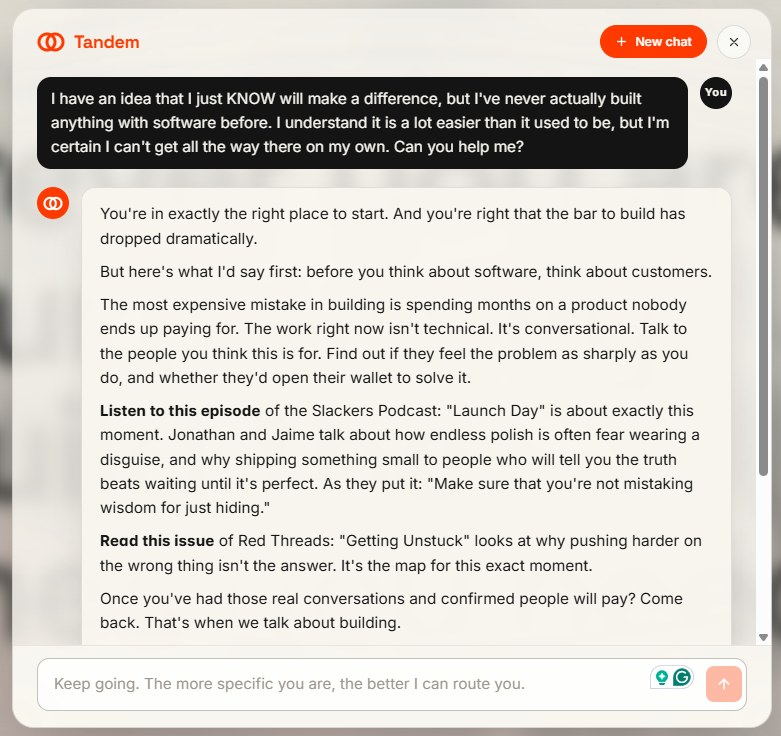
The Tandem agent answering a visitor who has an idea but has never built software, routing them to a podcast episode and a newsletter issue before talking about building.
Live on tandemstudio.ai. It gave away a podcast episode and a newsletter issue before it mentioned working together.

Talk to theirs

We built these for clients.

Both use the same system as the agent on our home page. Each one sounds like its own company, because we built it with that company's founder. Talk to them and hear the difference.

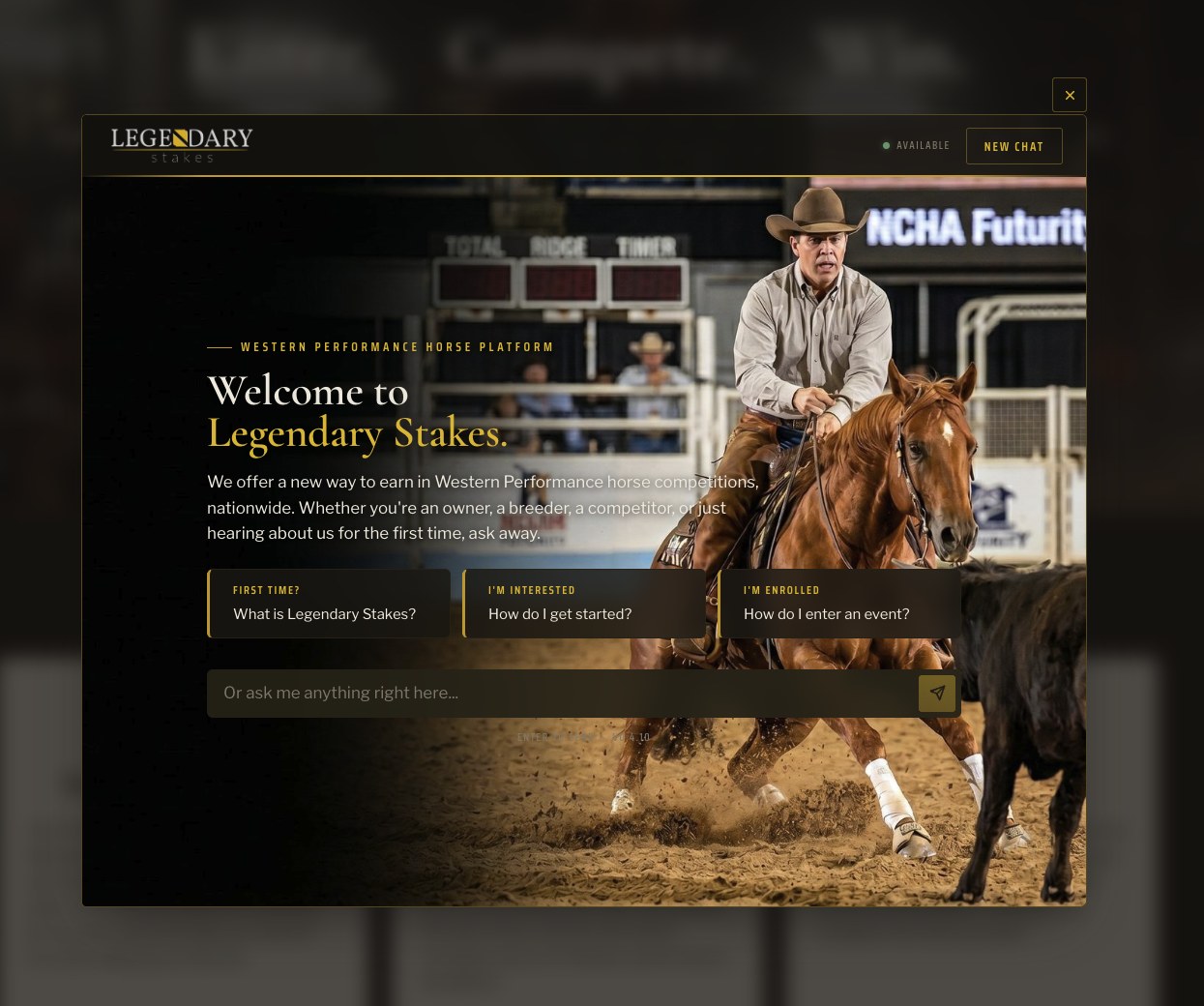
The Legendary Stakes agent over a photograph of a cutting horse at work, with entry points for first-time visitors, interested owners, and enrolled competitors.
Legendary Stakes Live now

Earnings and competition records for horses in western performance events, from barrel racing to cutting and roping. The agent opens with the question the company was founded on: tell me about your horse.

“A horseman can land on our site, tell the agent about their stallion or competing offspring, and see what that horse has earned and how they can now earn more than ever. It talks like someone who's been around these events. Nothing like it has ever existed before.”
Shane Plummer, Founder, Legendary Stakes
Talk to Legendary Stakes
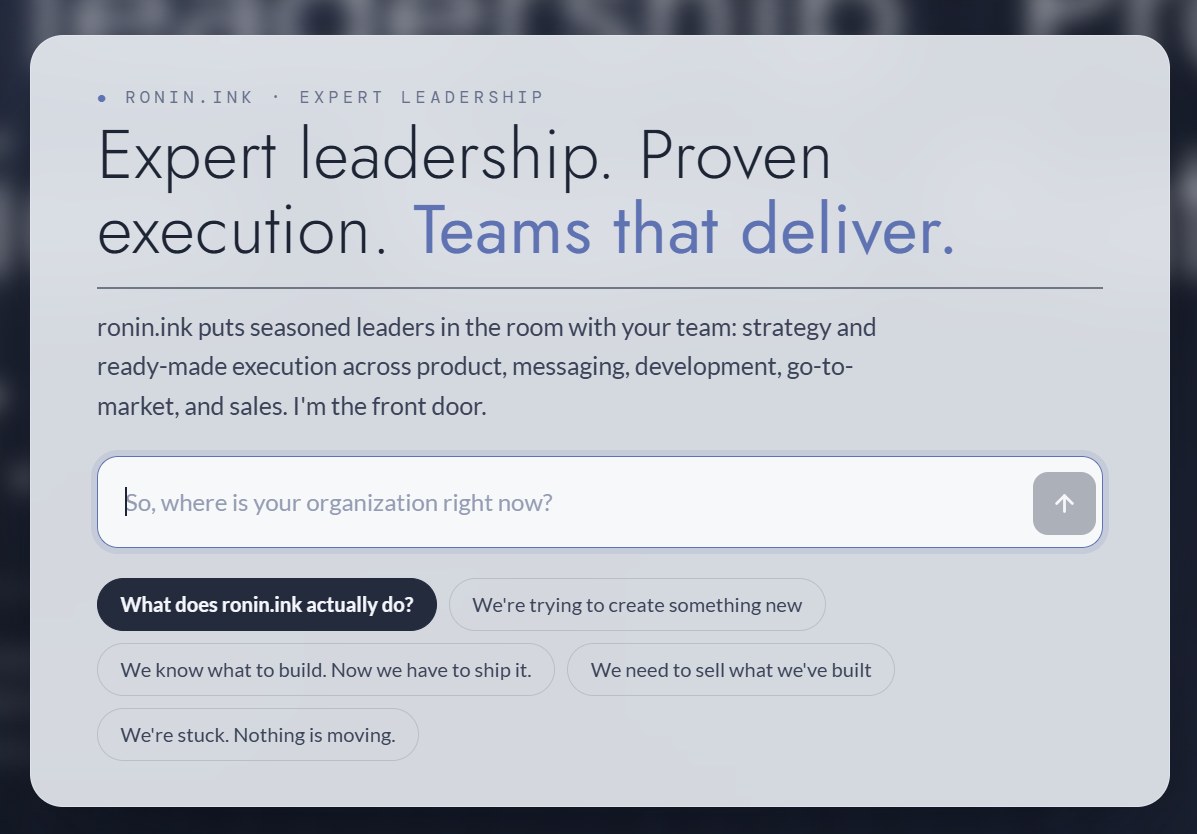
The ronin.ink agent on a slate panel, offering starting prompts about where an organization is right now.
ronin.ink Live in November

A team of seasoned leaders across product, messaging, development, go-to-market, and sales. Its agent went through a detailed interview process before it said a word to anyone.

“At ronin.ink we know AI. We're often the ones people call to create systems that actually deliver on the promise. But that means we also know there's no AI that replaces a chat with a ronin. Tandem Studio's site agent for ronin.ink was built with the two teams in lockstep, for an interaction deeply rooted in our company, our capabilities, and the needs of our customers. It's the only AI we'd trust to answer the door.”

Aric Marshall, Founder, ronin.ink

The problem

Most 24/7 assistants are irritating and if you're lucky, they take a message.

A lot of companies already have one. It greets, it deflects, it asks for an email, and everyone involved knows it's a way of saying, “we can't be bothered with you right now.”

The technology is not the problem. Nobody wrote down what the thing was supposed to know, how it was supposed to sound, what it was allowed to say, or what it should do when a real question showed up. So it does the only safe thing available to it, which is nothing.

Large enterprises staff a team for this. Most companies can't, and end up choosing between a widget that sounds like nothing in particular or no front door agent at all. We build for them: businesses where the expertise runs deep, the voice is specific, but nobody on staff has the time to build an agent that does both justice.

What it is

The agent is the visible part.

Underneath it sits a knowledge block. That block is what we actually build, and it is the part you keep. It holds what your business has published, what it has recorded, and what the people behind it actually think. This is what the knowledge block contains:

The highlighted pieces are the ones most builds skip.

01Operating contextWho it is, what it represents, what it is allowed to know.
02Voice profileHow it sounds, down to the words and patterns it will never use.
03PostureWhat it is for. The decision almost everyone skips.
04WorldviewWhat your business actually believes, so the answers hold up under pressure.
05Interaction patternsThe five or six conversations that carry all the volume.
06Routing and escalationWhen a person takes over, and how the handoff reads to the visitor.
07BoundariesWhat it will not do, even when asked directly.
08Drift checksWhat good looks like, and the early signs it is going wrong.
09Sources and updatesWhat it reads from, and how it stays current after we leave.

The posture

We build these to give immediate value.

If a visitor asks something it can answer well, it answers. It does not hold the answer behind a form. It does not close every reply with a pitch. When someone is a bad fit, it says so and points them somewhere better.

That is a choice, not a default, and it is the reason ours works. We build it that way or we do not build it. If what you want is a lead form with a personality, there are cheaper places to get one.

Transcript · how it handles a bad fit
Visitor

We're a twelve person DTC brand. Revenue is flat and I think we need to rebuild the site. Can you do that?

Agent

Maybe. Two questions first. Who is the site for, and what is it for?

If traffic is flat too, a rebuild moves the furniture around a room nobody is walking into.

Visitor

Traffic is fine. Conversion dropped about thirty percent since spring.

Agent

Then the site probably is not the problem, or at least not all of it. A thirty percent conversion drop against steady traffic usually means the traffic changed. Where was it coming from before spring, and where is it coming from now?

Start there before you spend a dollar on a rebuild. If the page turns out to be the real issue, we are worth a conversation. If it is the channel, we are not the right call, and I would rather say so now than in month two.

What it needs from you

Shaped by how you already talk.

Every build starts with us sitting down with the founders. We ask the questions your customers ask and learn how you answer them. Then we add whatever you've already made: a newsletter archive, a podcast back catalog, recorded customer calls, internal documentation. You don't need all of it. Any of it gives the agent more to be generous with.

What you get

You own all of it.

The live agent

On your site, in your voice, wired to the sources you actually have.

The knowledge block

Written and yours. Not a config file we hold. A versioned artifact you can read, edit, argue with, and hand to whoever maintains it next.

The routing

Connected to wherever your team already works, so a live conversation reaches a person the same day.

The ability to leave

If you decide in a year to rebuild it somewhere else, everything you need is in the knowledge block. That is on purpose.

We measure our success by how capable our clients become, not by how long they need us.

Where this sits

One focused build, or a whole system.

Some clients start here because the front door is visibly broken. Some arrive here inside a Jump, as one of the systems we ship across sixty days with the whole team in the room. Both start from the same place.

Scope, timeline, and price come out of one conversation, because the answer depends on what you already have.

Reach us here to get started. jump@tandemstudio.ai

Questions

Before you ask.

Q. What is a Tandem Agent?

A custom AI agent that lives on your website and answers visitors in your company's voice. Underneath it is a knowledge block: a written document of what your business knows, how it sounds, what it will and won't say, and when a person takes over. You keep both.

Q. Who are these built for?

Small to mid-size businesses and startups where the expertise runs deep and the voice is specific, but nobody on staff has time to build an agent that does both justice. Large enterprises staff a team for this. We build it for everyone else.

Q. How long does it take, and what does it cost?

Scope, timeline, and price come out of one conversation, because the answer depends on what you already have: a newsletter archive, recorded calls, documentation, or just the founders' time. A focused agent build is smaller than a full sixty-day Jump; a Jump can include one.

Q. Do we own the agent?

Yes. The live agent, the knowledge block underneath it, and the routing into your team are all yours. If you decide in a year to rebuild it somewhere else, everything you need is in the document.

Proof

Now go back and talk to ours.

You know what is under it. Ask it something hard. Ask whether we are a fit for you. Ask it to tell you when we are not.

Talk to ours